
2025 State of Hep C Medicaid Access Report Cards Show Policy Gains and Ongoing Challenges Amid Shifting Federal Landscape
Washington, DC — [January 21, 2026]
The Center for Health Law and Policy Innovation (CHLPI) at Harvard Law School and the National Viral Hepatitis Roundtable (NVHR) today released the 2025 National Snapshot Report for the Hepatitis C: State of Medicaid Access project, highlighting continued state-level progress in reducing policy barriers to hepatitis C virus (HCV) treatment for Medicaid enrollees—while underscoring persistent gaps and new uncertainties tied to broader health policy shifts.
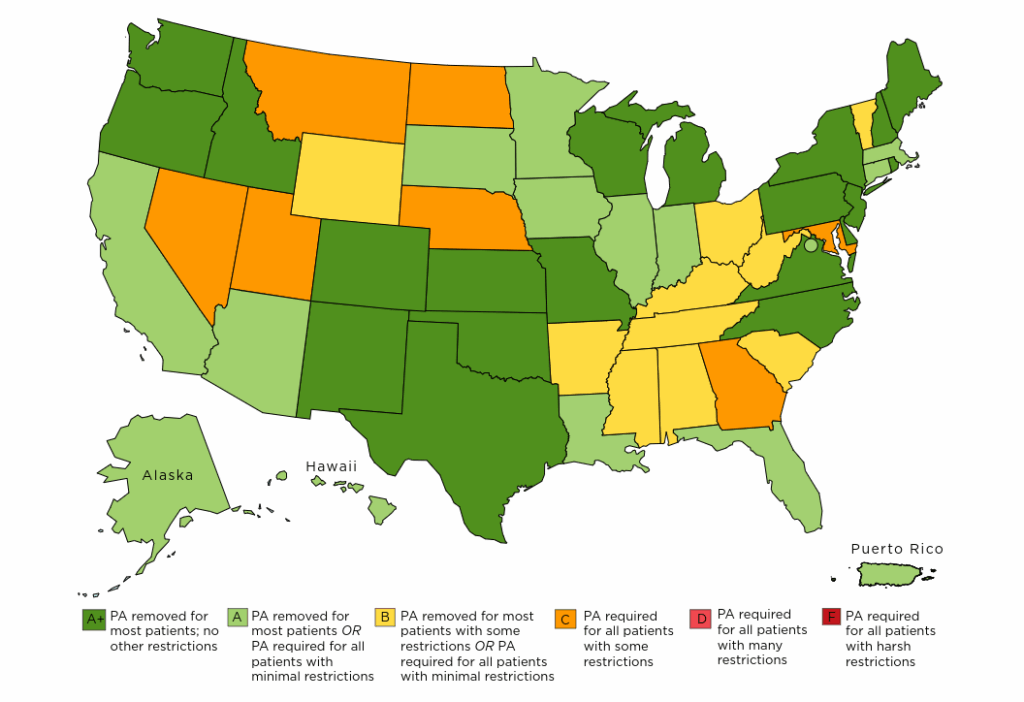
Since the 2024 snapshot update, six additional jurisdictions—Iowa, Maine, Minnesota, New Jersey, New Mexico, and West Virginia—have removed prior authorization (PA) requirements for initial HCV treatment. As a result, 34 jurisdictions now have no PA requirements for most Medicaid patients, marking continued headway toward improving timely access to curative treatment.
At the end of 2025, more than two-thirds of states received top grades, with 15 states earning an A and 20 states earning an A+ on their report cards. Notably, no states remain at a D or F grade, reflecting steady national progress toward more evidence-based Medicaid access policies.
Multiple states also made additional policy improvements in 2025, including newly achieved parity between managed care organizations (MCO) and fee-for-service programs, which encourages better consistency in access within state Medicaid programs.
Despite these gains, restrictions persist in several jurisdictions, including:
- Substance use restrictions in 6 states: Alaska, Mississippi, Montana, Nebraska, North Dakota, West Virginia;
- Retreatment restrictions in 12 states: Alabama, Arizona, California, Florida, Georgia, Indiana, Kentucky, Maryland, Montana, North Dakota, West Virginia, Wyoming; and
- Prescriber-type restrictions in 3 states: Arkansas, Illinois, Nevada
CHLPI and NVHR continue to encourage all jurisdictions to align Medicaid requirements with current clinical treatment guidelines to ensure equitable, timely, and more humane access to hepatitis C care.
“We recognize and applaud the jurisdictions who have taken steps to remove prior authorizations and reduce other barriers to Medicaid HCV treatment access,” said Isabel Evans, Director of Programs at the National Viral Hepatitis Roundtable. “However, efforts must continue to ensure that progress does not stagnate, and that improved policies are reflected in equitable treatment access for all individuals.”
“Medicaid policy plays a decisive role in determining whether people can access curative hepatitis C treatment when they need it,” Elizabeth Kaplan, Director of Health Care Access at the Center for Health Law and Policy Innovation, said. “While many states have made important strides, the persistence of access restrictions highlights the need for additional transparency and durable policy solutions that outlast changes in administration.”
Report Card Methodology: A Snapshot in Time
The 2025 Report Cards continue to be a national compilation that reflects an up-to-date assessment of publicly available information about Medicaid recipients’ ability to access direct-acting antivirals across all states, Puerto Rico and the District of Columbia. Grades are based on a standardized rubric that evaluates specific Medicaid policies, including:
- Prior authorization requirements
- Substance use or sobriety restrictions
- Prescriber limitations
- Retreatment restrictions
- MCO parity and transparency
These report cards assess key criteria that historically have had an outsized impact on treatment access. However, CHLPI and NVHR note that they do not exhaust the multiple intersecting factors that can influence prescribing and treatment access. Additional aspects of public health insurance benefit design and structure also likely contribute to an ongoing lag in treatment uptake. Accordingly, report card grades should be understood as a policy-access snapshot, not a comprehensive assessment of care delivery or patient outcomes.
Policy Context and Federal Administration Changes
The 2025 Report Cards are released following, and during, a period of transition in federal leadership and administrative priorities. Although hepatitis C and access to direct-acting antivirals are not a specific focus of forthcoming Medicaid restrictions, the policies passed under the One Big Beautiful Bill Act are likely to significantly shape access to hepatitis C medications through changes to Medicaid policy implementation, oversight, and enforcement. For example, the consequences of new nationwide eligibility criteria, such as work requirements, are likely to complicate state elimination goals, especially as they pertain to low-income communities.
CHLPI and NVHR will continue to monitor how evolving federal and state policy environments affect Medicaid access and remain committed to independent, data-driven analysis that supports equitable hepatitis C prevention, treatment, and care. Eliminating hepatitis C as a public health threat will require durable policy reforms, consistent implementation, and sustained political commitment in the coming years. While the 2025 report cards demonstrate meaningful progress, remaining restrictions and uneven implementation highlight the importance of continued monitoring, advocacy, and accountability.
View the new Hepatitis C: State of Medicaid Access 2025 National Snapshot Report here or download it here. For more information about hepatitis C treatment access barriers, please visit www.stateofhepc.org.
About the Center for Health Law and Policy Innovation of Harvard Law School (CHLPI)
The Center for Health Law and Policy Innovation of Harvard Law School (CHLPI) advocates for legal, regulatory, and policy reforms to improve the health of marginalized populations, with a focus on the needs of low-income people living with chronic illnesses and disabilities. CHLPI works to expand access to high-quality health care; to reduce health disparities; to develop community advocacy capacity; and to promote more equitable and effective health care systems. CHLPI is a clinical teaching program of Harvard Law School and mentor’s students to become skilled, innovative, and thoughtful practitioners as well as leaders in health and public health law and policy. For more information, visit www.chlpi.org.
About the National Viral Hepatitis Roundtable (NVHR)
The National Viral Hepatitis Roundtable, an initiative of HEP, is a national coalition fighting for an equitable world free of viral hepatitis. NVHR seeks to eliminate viral hepatitis in the United States and improve the lives of those affected through advocacy, education, and support to national, state and local partners. For more information, visit www.nvhr.org.
MEDIA CONTACTS
Isabel Evans: Isabel@nvhr.org
Ada Ezeokoli: aezeokoli@law.harvard.edu